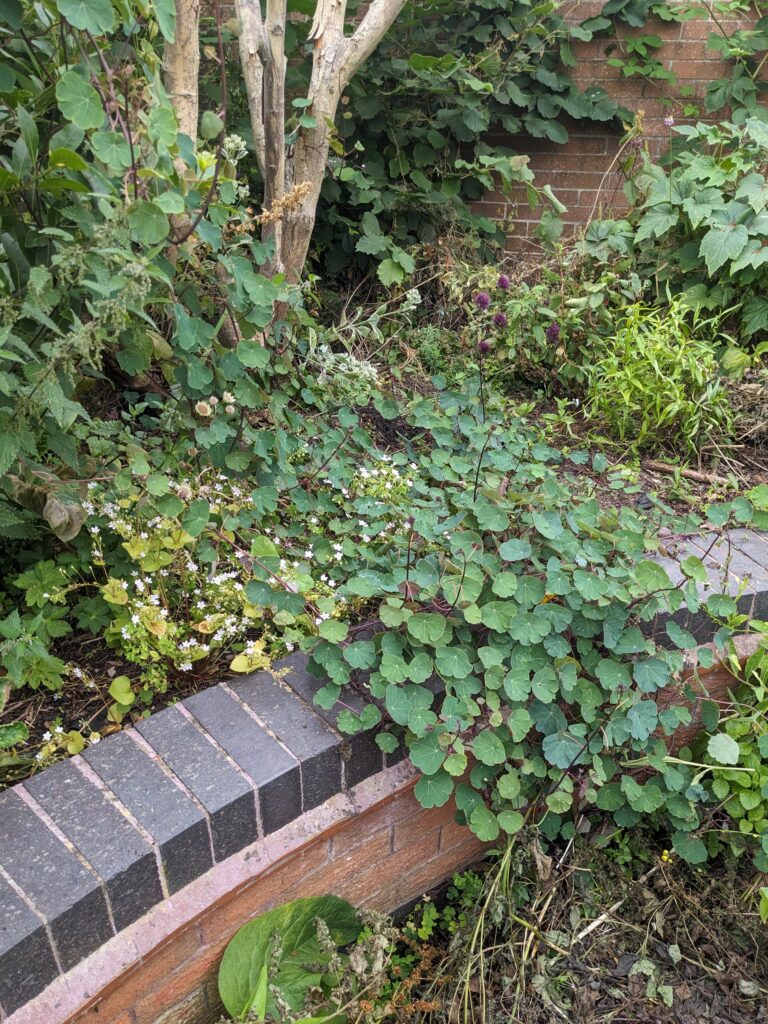
I am growing and eating two of the species in this group. Both I grew from seed. They are a useful addition to the salad bowl through the winter and spring. They are woodland plants and so are happy to grow in the shade. This is always a bonus when so many other plants like full sun, and space in my sunny boarders is premium.
Miners Lettuce – Claytonia perfoliata
This plant is an annual. However, I have found that it self seeds happily around the area that it grew the previous year. I planted seeds two years ago and am on my second year of seedlings popping up in the autumn. They will grow slowly over the winter then grow substantially in the spring when they flower and then disappear until the following autumn.
These plants grow to about 25cm diameter. They have spade shaped leaves which grow in rosette form from the centre. The flowers are unusual, seeming to grow out of the middle of a leaf. All the above ground parts are edible. The stems and leaves are both soft and fleshy. They have a very mild flavour and so are good for bulking out a salad. I like to mix them with whatever else I have growing in the garden at that time; lambs lettuce, sculpit, sorrel, parsley, welsh onions etc. to make a lovely green salad where every mouthful is a different combination.

Pink Purslane – Caytonia Sibirica
This is a perennial plant which is similar to Miners Lettuce. I grew mine from seed this year. While they germinated well, only three grew (I think the birds found them tasty so I covered these with cloches while they were growing bigger). It is reported that they should self seed easily, so I am hoping to see a lot more popping up in the next few months. I planted them in the shady part of my garden with the hope that they will form the predominant groundcover there.
The plants did get rather buried under my mashua plant, which after a slow start, went crazy climbing the bay tree, draping itself over the raised bed wall (which is what I wanted it to do) but also covering a lot of the garden bed. I rearranged the mashua tendrils today and was pleased to see that the purslane is still growing strong. While you would expect this plant to have pink flowers, and in some photos that I have seen, it does, mine has white flowers with a hint of pink.
Pink purslane grows well through the winter. In her book, The Wilderness Cure, Mo Wilde reported eating this as one of her main foods over winter when she was living off foraged foods. The leaves are slightly tougher than the miners lettuce. They also taste like raw beetroot. While this is not my favourite flavour, if they are mixed in with other leaves and herbs they make a good addition to salads.
From a nutritional point of view, both purslanes are high in vitamin C which will help boost your immune system. They are reported to aid digestion and reduce inflammation as well. They are certainly a welcome addition to my garden and to my salad bowl.